
When you hear the phrase “aba antecedent”, it may sound technical, but the idea is simple. In Applied Behavior Analysis (ABA), an antecedent is what happens right before a behavior occurs. It’s the trigger, cue, or signal that sets the stage for an action. Understanding antecedents is one of the most important skills for ABA professionals and anyone preparing for the RBT exam.
What Does “Antecedent” Mean in ABA?
In ABA, the antecedent refers to the event, interaction, or environment that comes immediately before a behavior. Think of it as the “cause” that often leads to an observable response.
For example:
A teacher says, “Please sit down.” The instruction is the antecedent.
A child sits down in their chair. That’s the behavior.
By identifying antecedents, ABA professionals can better predict and guide behaviors.
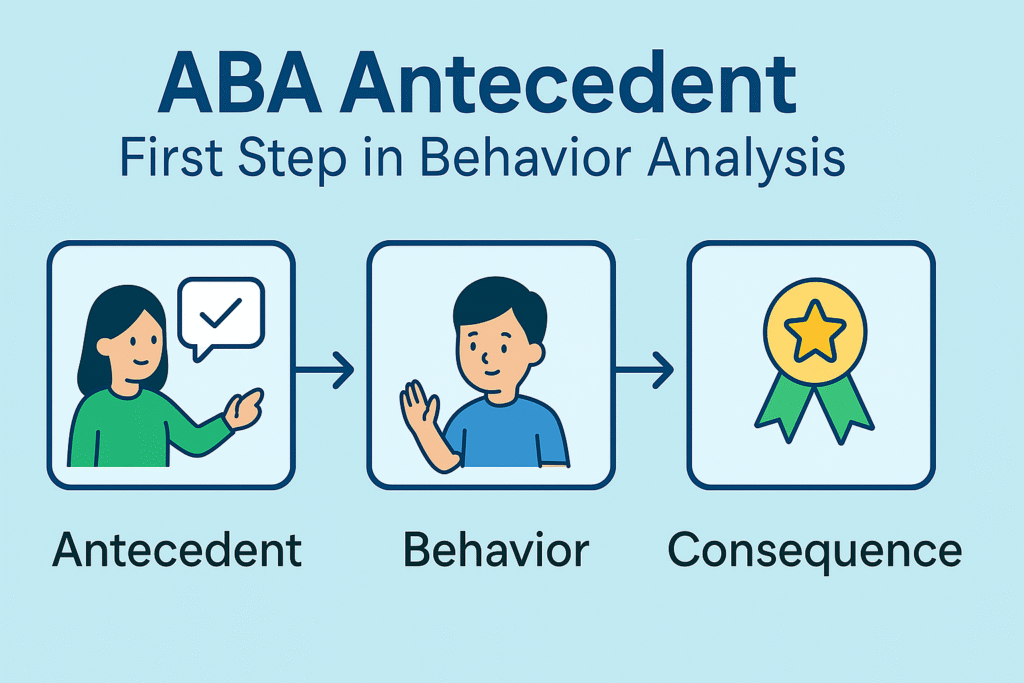
The ABC Model: Antecedent, Behavior, Consequence
One of the most common frameworks in ABA is the ABC model:
Antecedent – What happens right before the behavior.
Behavior – The action itself.
Consequence – What happens after the behavior, which affects whether it will happen again.
For example:
Antecedent: A parent asks a child to put away toys.
Behavior: The child throws the toys.
Consequence: The parent removes the toys and gives the child a break.
In this case, the antecedent (parent request) set the stage for the behavior, and the consequence shaped whether the behavior might repeat.
Applied Behavior Analysis relies on this model as a foundation for teaching new skills and reducing problem behaviors.
Common Types of Antecedents in ABA Therapy
Not all antecedents look the same. In fact, they can be broken down into different categories:
Instructions or demands: A teacher giving directions.
Environmental cues: A loud noise, bright light, or crowded room.
Social interactions: A peer asking to play or teasing.
Schedules and routines: Transition times like moving from recess to class.
Internal states: Hunger, tiredness, or frustration.
By recognizing these, ABA professionals can adjust the environment or teaching method to set up more positive outcomes.
Why Antecedents Matter in Behavior Management
Understanding antecedents is not just about stopping negative behaviors—it’s about creating opportunities for success.
Prevention: If you know a child becomes upset during transitions, preparing them ahead of time can prevent meltdowns.
Teaching moments: Antecedents can be used to prompt learning. For example, showing a picture card before asking a child to name the object.
Consistency: Recognizing antecedents helps RBTs stay consistent in sessions, which is key for client progress.
According to the BACB , antecedent-based strategies are a core part of effective ABA programs.
Antecedent Strategies Used in ABA Sessions
Behavior technicians often use antecedent interventions to guide learning and prevent challenging behaviors. Some common strategies include:
Priming: Giving a preview of what’s coming next.
Visual schedules: Using charts or cards to show the order of activities.
Clear instructions: Keeping requests short and direct.
Environmental adjustments: Minimizing distractions or rearranging a room.
Choice making: Allowing the client to choose between two options to increase engagement.
These strategies are particularly helpful when preparing for RBT practice scenarios that may appear on an exam.
How “A” Links to the RBT Exam
If you’re preparing for the Registered Behavior Technician (RBT) exam, understanding antecedents is essential. The exam often tests knowledge of the ABC model and how antecedents influence behavior.
To prepare effectively:
Take a rbt practice exam to test your knowledge of behavior terms.
Try a rbt practice test with scenario-based questions.
Use a rbt mock test to simulate the real exam experience.
These resources can help you feel confident about identifying and applying antecedent strategies in real-world ABA sessions.
Real-Life Examples of Antecedents in Action
Here are a few everyday examples to make the concept stick:
Classroom Example
Antecedent: Teacher gives a math worksheet.
Behavior: Student avoids work by putting their head down.
Consequence: Teacher provides extra help.
Home Example
Antecedent: Parent says “Time for bed.”
Behavior: Child asks for a story.
Consequence: Parent reads a book, reinforcing the request.
Therapy Example
Antecedent: Therapist shows a flashcard with an apple.
Behavior: Child says “apple.”
Consequence: Therapist praises and gives a small reward.
These examples highlight how antecedents shape learning and behavior across different environments.
FAQs About ABA Antecedents What is an example of an antecedent in ABA?
An antecedent could be a teacher’s instruction, like “line up,” or an environmental factor, such as the sound of a school bell.
How do antecedents affect behavior?
Antecedents set the stage for behavior by triggering or signaling what’s expected. They influence how a person responds in a given moment.
What is the difference between an antecedent and a trigger?
In ABA, the term antecedent is more formal, while “trigger” is a casual way to describe the same idea—the event that sparks a behavior.
Conclusion: Mastering Antecedents for ABA Success
The aba antecedent is more than just a technical term. It’s the starting point of behavior analysis, the cue that helps ABA professionals understand why actions happen and how to shape them. Whether you’re studying for the RBT exam or applying ABA strategies in daily life, learning about antecedents will make you more effective in guiding positive outcomes.
Ready to put your knowledge into practice? Start your rbt practice exam today and take the next step toward becoming a confident, prepared RBT.