
Applied Behavior Analysis (ABA) is built on a simple yet powerful framework called Antecedent Behavior Consequence (ABC). This model helps therapists, teachers, and Registered Behavior Technicians (RBTs) understand why a behavior happens and how to encourage positive change. If you’re preparing for the RBT exam or want to strengthen your ABA knowledge, mastering the ABC model is one of the best places to start.
What Does ABA Antecedent Behavior Consequence Mean?
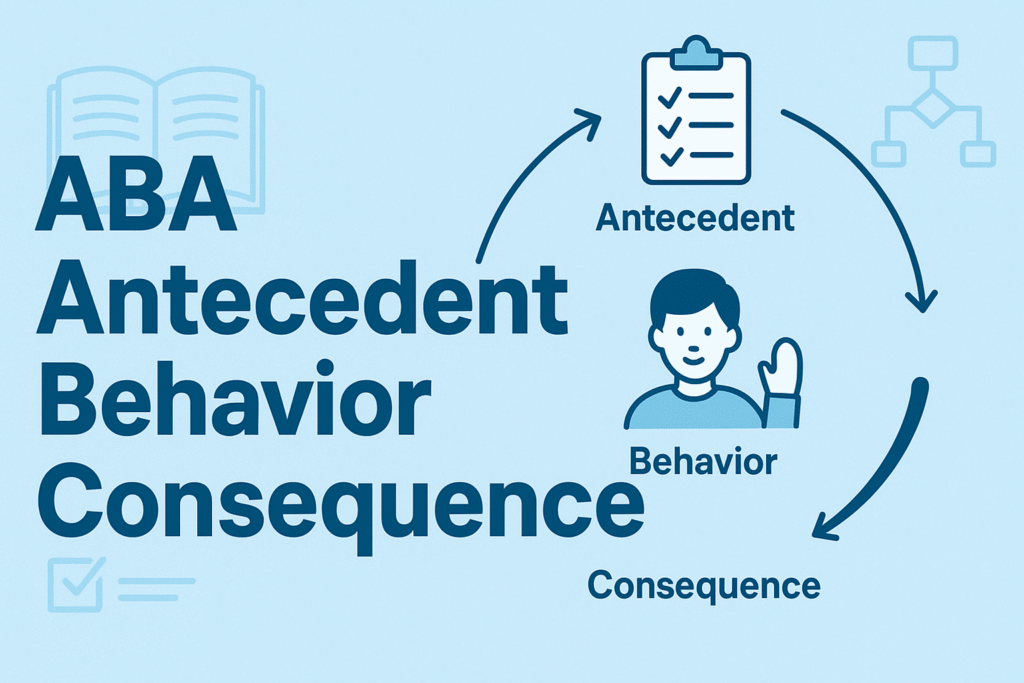
The ABC model in ABA describes how behavior is influenced by what happens before and after it:
Antecedent – What happens right before a behavior.
Behavior – The observable action taken by the individual.
Consequence – What happens immediately after the behavior.
This framework helps ABA professionals identify triggers, predict outcomes, and design effective interventions. According to the BACB , RBTs are required to understand and apply ABC data collection as part of their practice.
Breaking Down the ABC Model in ABA
- The Antecedent: Setting the Stage
The antecedent is the event or situation that comes right before a behavior. It can be a request, environmental condition, or even the absence of something.
Examples of antecedents in ABA:
A teacher asks a child to complete a worksheet.
A parent tells a child to clean their room.
A peer makes a comment that upsets someone.
Recognizing antecedents is crucial because they often predict what behavior will occur.
- The Behavior: Observable Actions
The behavior is the individual’s response that can be seen or measured. In ABA, only observable actions are considered behaviors not emotions or thoughts.
Examples of behaviors:
Completing a math problem.
Crying or yelling.
Raising a hand in class.
For RBTs, describing behavior clearly is key. Instead of saying “the child was upset,” you’d say, “the child cried and stomped feet for 2 minutes.”
- The Consequence: What Follows
The consequence is what happens immediately after the behavior. It can either increase or decrease the likelihood of the behavior happening again.
Examples of consequences:
Teacher praises the student for completing work.
Parent removes a toy after aggression.
Peer laughs at a joke, reinforcing the behavior.
Consequences can be reinforcing (strengthening behavior) or punishing (reducing behavior).
Why Is the ABC Model Important in ABA?
The ABA antecedent behavior consequence model is the foundation for behavior analysis. It allows RBTs and therapists to:
Collect accurate data.
Identify behavior patterns.
Create individualized intervention plans.
Promote positive replacement behaviors.
For RBT exam prep, understanding how to apply ABC analysis is essential. You’ll often encounter scenarios where you must identify the antecedent, behavior, and consequence from a description. Practicing with an rbt practice exam can make this much easier.
How to Use ABC Data Collection
ABC data collection is a method where RBTs record what happens before, during, and after a behavior.
Steps for ABC data collection:
Write down the antecedent (what triggered the behavior).
Record the specific behavior (clear and measurable).
Note the consequence (what happened immediately after).
Example:
Antecedent: Teacher says, “Time to put toys away.”
Behavior: Child screams and throws toys.
Consequence: Teacher allows extra playtime to calm the child.
This shows that the consequence (extra playtime) may reinforce the behavior (screaming).
Common Questions About ABA Antecedent Behavior Consequence What is an example of ABC in everyday life?
Imagine you get hungry (antecedent), you grab a snack (behavior), and your hunger goes away (consequence). That relief makes it more likely you’ll grab a snack again when hungry.
How is ABC used in ABA therapy?
ABA therapists use ABC to understand behavior patterns and design interventions. For example, if a child always cries when asked to do homework, the therapist may change the antecedent by offering choices or reinforcing positive effort.
Why is understanding consequences so important?
Consequences determine whether a behavior will happen again. If a consequence rewards the behavior (even unintentionally), the behavior is more likely to repeat.
Practical Examples of ABC in RBT Training
Here are some examples that may show up in an rbt practice test :
Scenario 1:
Antecedent: Teacher asks student to start math work.
Behavior: Student pushes paper away.
Consequence: Teacher completes the work for the student. Result: Avoidance of work is reinforced.
Scenario 2:
Antecedent: Parent tells child to clean up toys.
Behavior: Child cleans toys.
Consequence: Parent gives praise and a sticker. Result: Cleaning up is reinforced.
These examples show why it’s important to identify how consequences affect future behaviors.
How ABC Supports Positive Behavior Change
The ABC framework is not just about stopping negative behaviors it’s about teaching new, functional behaviors. By adjusting antecedents and consequences, ABA professionals can:
Reduce problem behaviors.
Increase social and communication skills.
Encourage independence.
For RBT candidates, this means being able to recognize how small environmental or consequence changes can lead to big improvements in client outcomes.
Study Tips for the RBT Exam: Focus on ABC
Since the ABC model is central to ABA, it will definitely appear on your exam. Here are some study strategies:
Practice with scenarios. Use flashcards or mock questions to identify antecedents, behaviors, and consequences quickly.
Use an rbt mock test to strengthen your recall under exam conditions.
Review ABA definitions. Always describe behaviors in observable, measurable terms.
Think in cause-effect. Antecedent triggers behavior occurs consequence follows.
Key Takeaways
ABA antecedent behavior consequence is the ABC framework used to understand and shape behavior.
Antecedent = what happens before, Behavior = observable action, Consequence = what follows.
RBTs use ABC data collection to identify triggers and outcomes.
Practicing ABC scenarios is essential for RBT exam prep.
Conclusion: Put Your Knowledge Into Practice
Understanding the ABA antecedent behavior consequence model is a cornerstone of behavior analysis and a critical skill for passing your RBT exam. By mastering how to identify antecedents, behaviors, and consequences, you’ll be ready to handle exam questions with confidence and more importantly, you’ll be equipped to make a real difference in practice.
Ready to test your skills? Start your rbt practice exam today and take one step closer to becoming a certified RBT.